





RESURFACE
How would life in design be for learning systems if we took in consideration how we learned as children?
Thesis project: Concept
Throughout childhood, we understand the world through curiosity, play, intuition, and experimentation. As we grow, these instinctive ways of learning are gradually replaced by standardised systems that assume everyone processes information the same way. This project questions that assumption and explores how reconnecting with our earliest cognitive patterns can help us develop more personal and sustainable ways of learning.
Guided by: Elio Salichs, Roc Herms, Mar Ferrer, Thinh Troung
Research
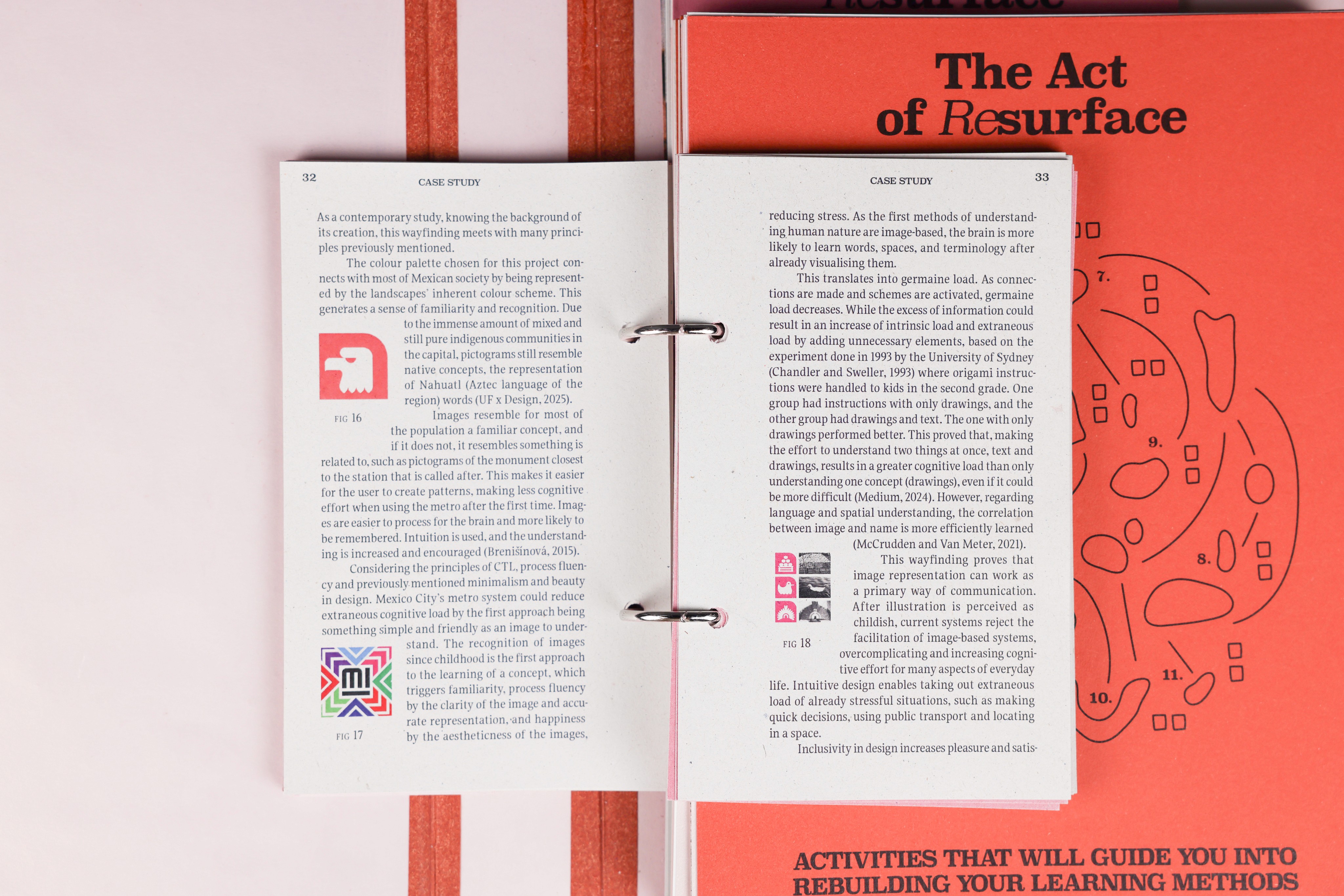
The research combines cognitive psychology, neuroscience, and design theory, drawing from Cognitive Load Theory, Gestalt principles, developmental psychology, and the concept of neuroplasticity. By studying how perception develops and how visual systems support intuitive understanding, using the Mexico City Metro wayfinding system as a case study, the project investigates how design can work with the mind instead of against it.
Product
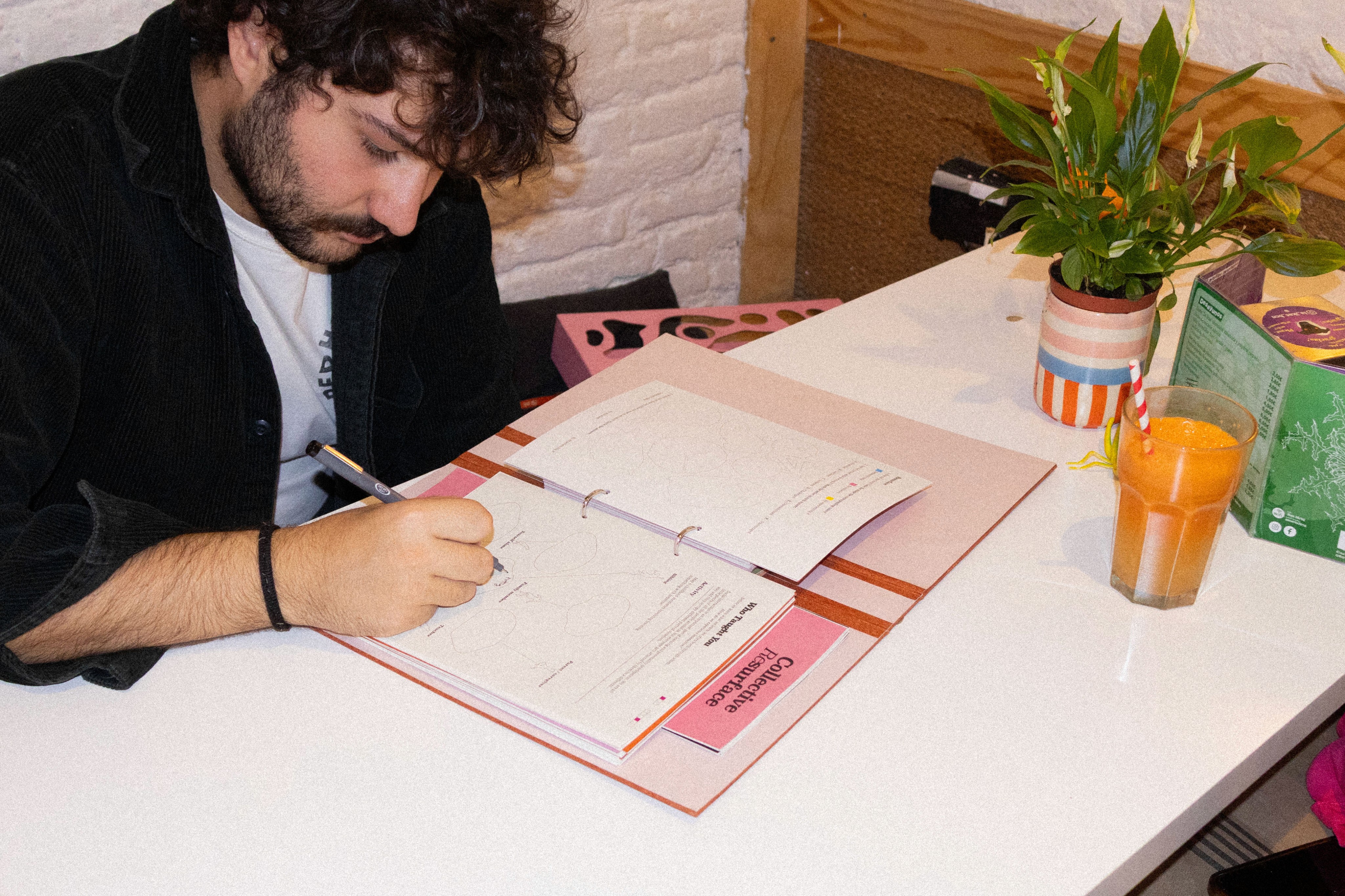
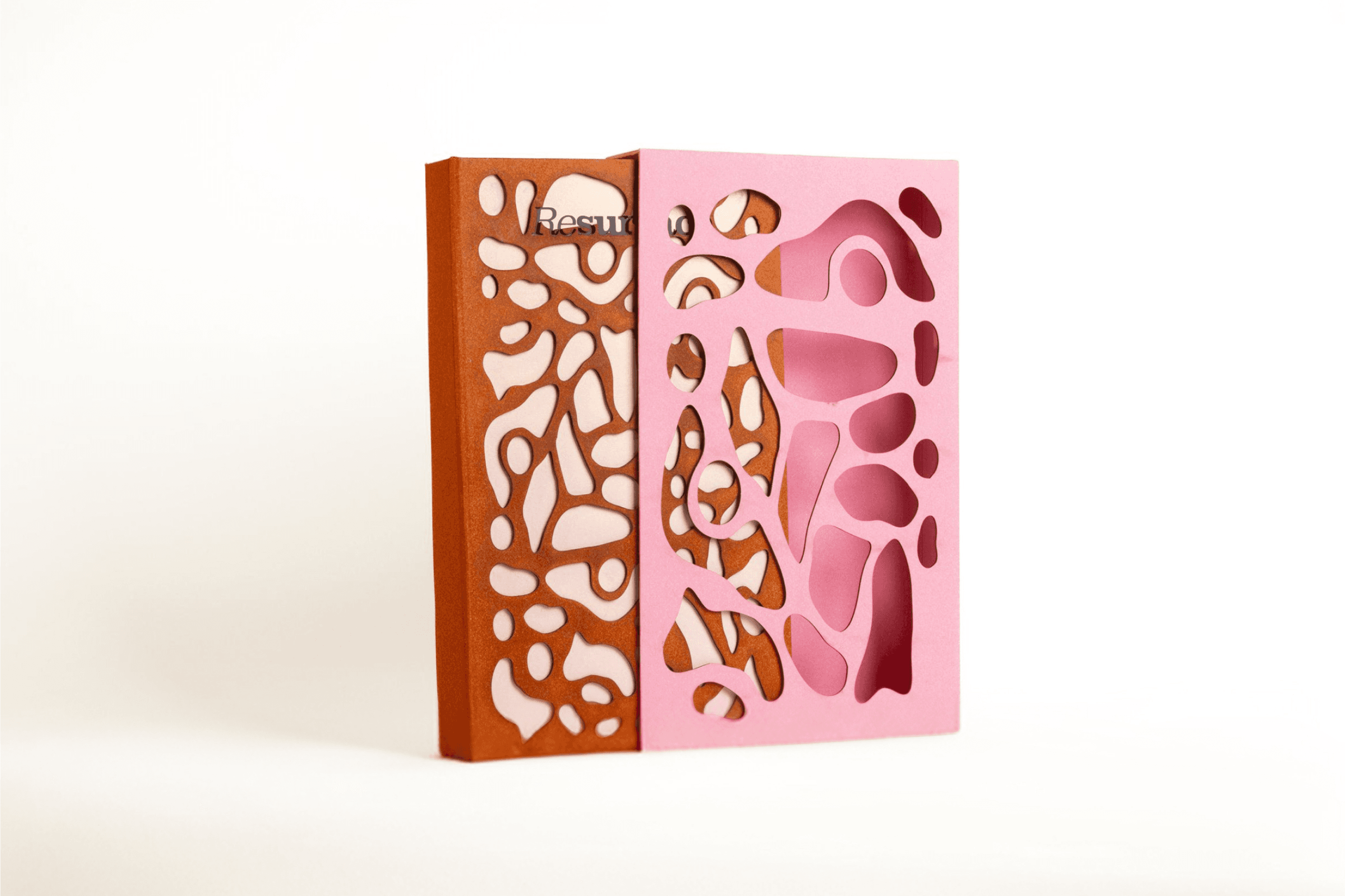
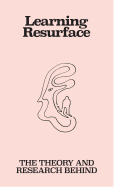
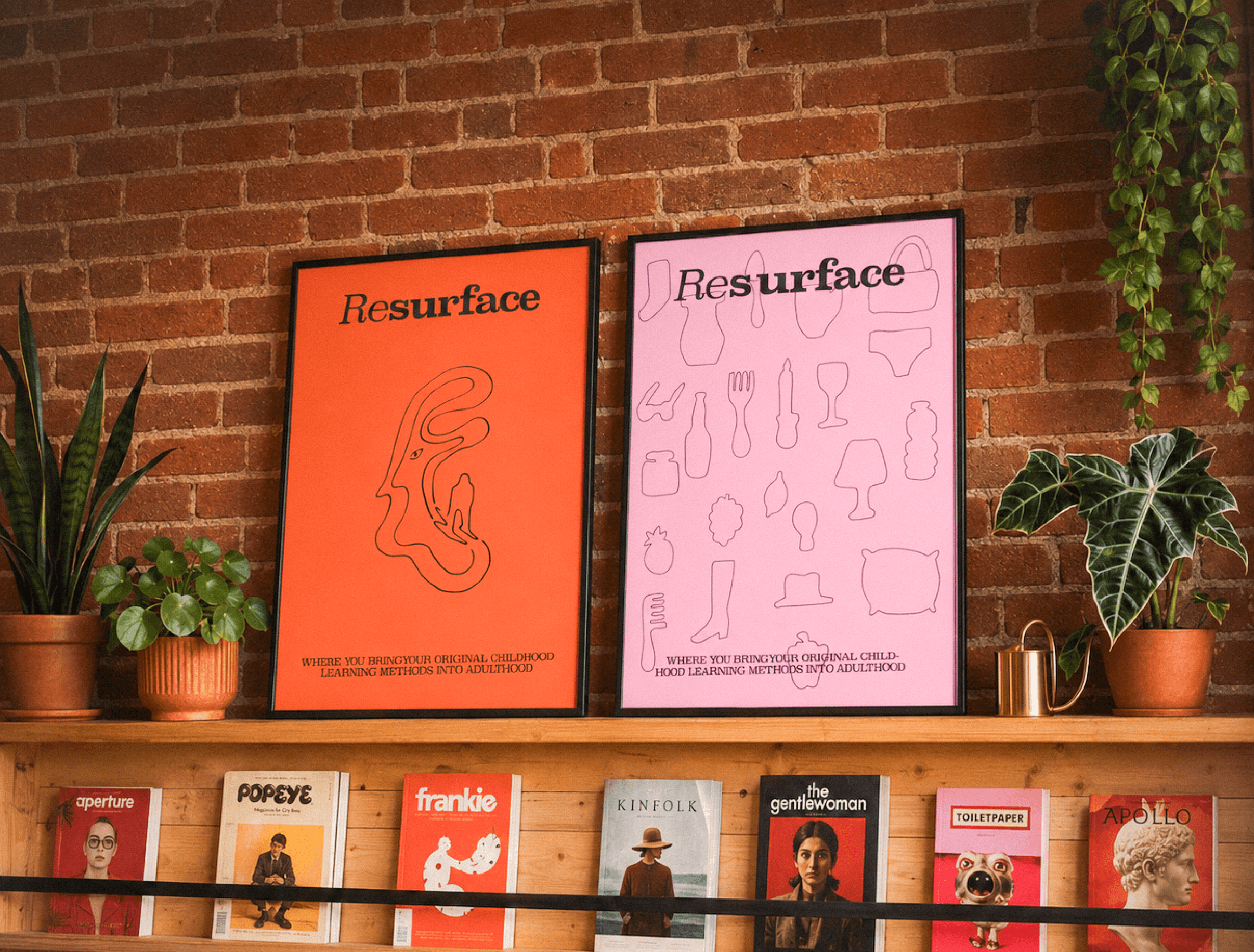
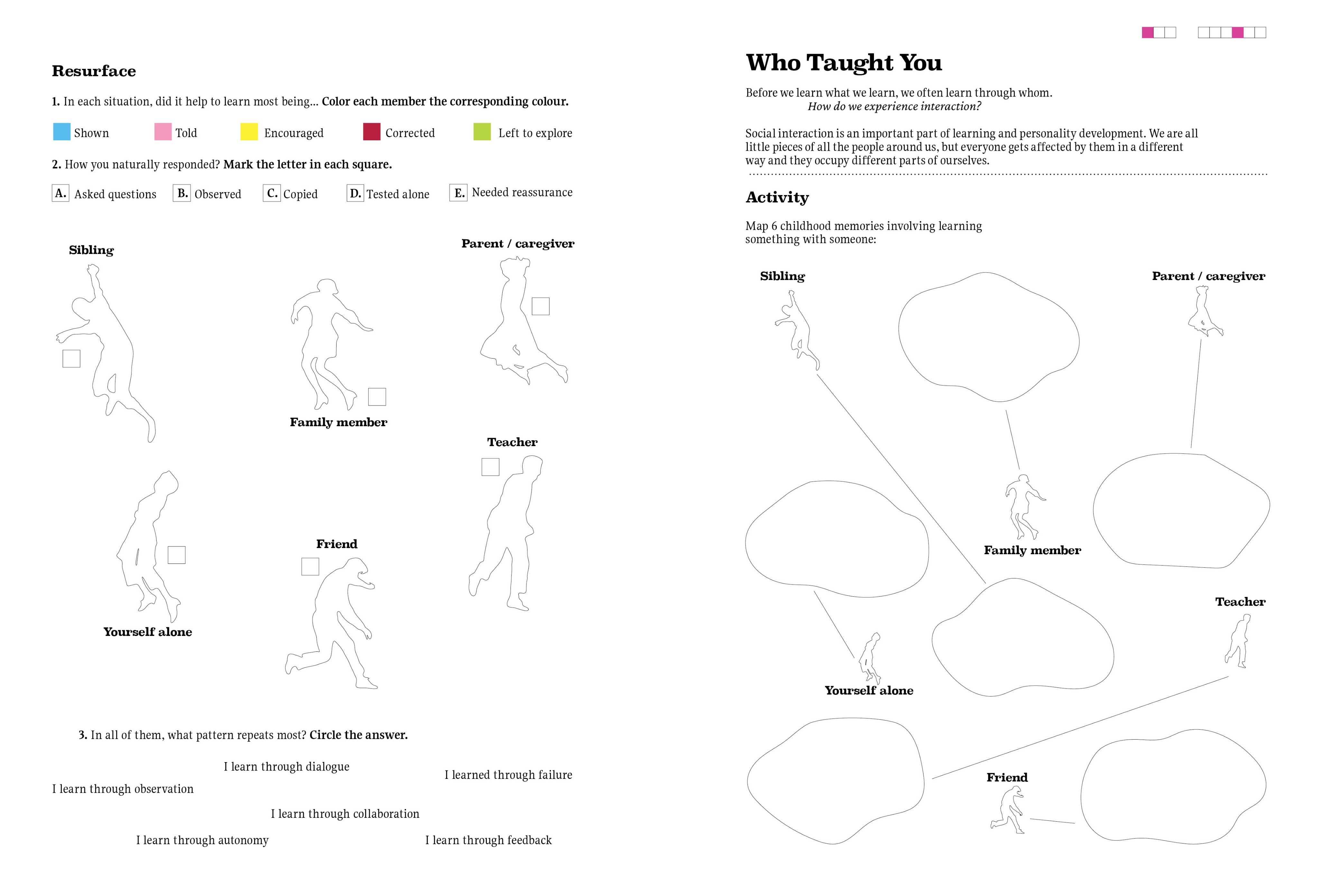
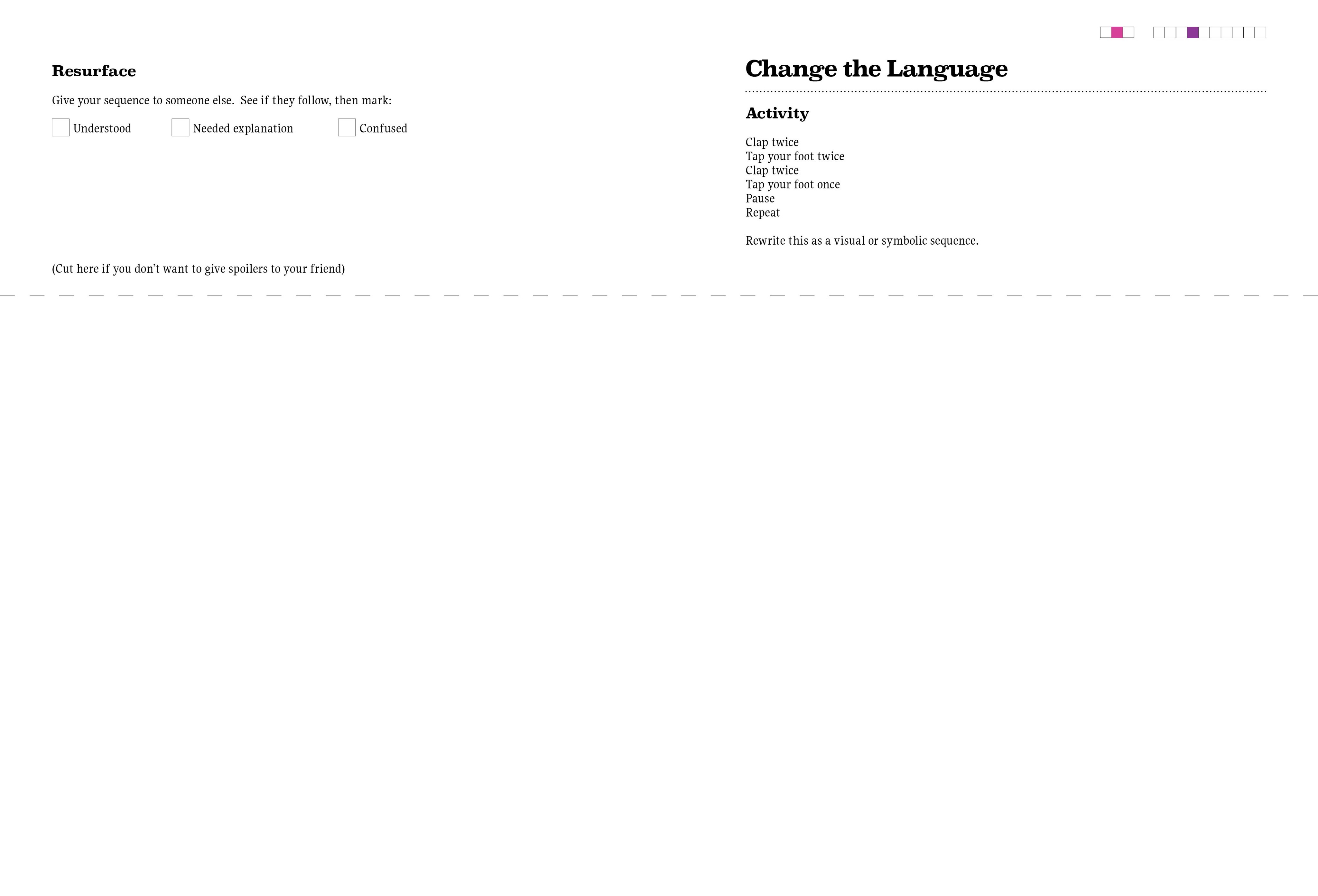
These findings became Resurface, a modular editorial toolkit designed around playful exercises that encourage users to revisit their own cognitive structures. Through memory, analysis, mapping, and visual organisation, the binder allows each person to build a learning system based on their own intuition rather than predefined methods.
What for?
Rather than teaching what to learn, Resurface focuses on how we learn. It proposes that the answers to our most effective learning strategies may already exist within us, hidden beneath years of educational and social conditioning. By resurfacing these early patterns, the project encourages self-awareness, cognitive independence, and a more personal relationship with knowledge, proposing design methods that prioritise personal inherent cognitive ways of navigation rather than generic trends.




1.
3.
2.
5.
9.
7.
11.
10.
4.
8.
1.
3.
2.
5.
9.
7.
11.
10.
4.
8.


Remember
1.
2.
3.
Explore
Practice







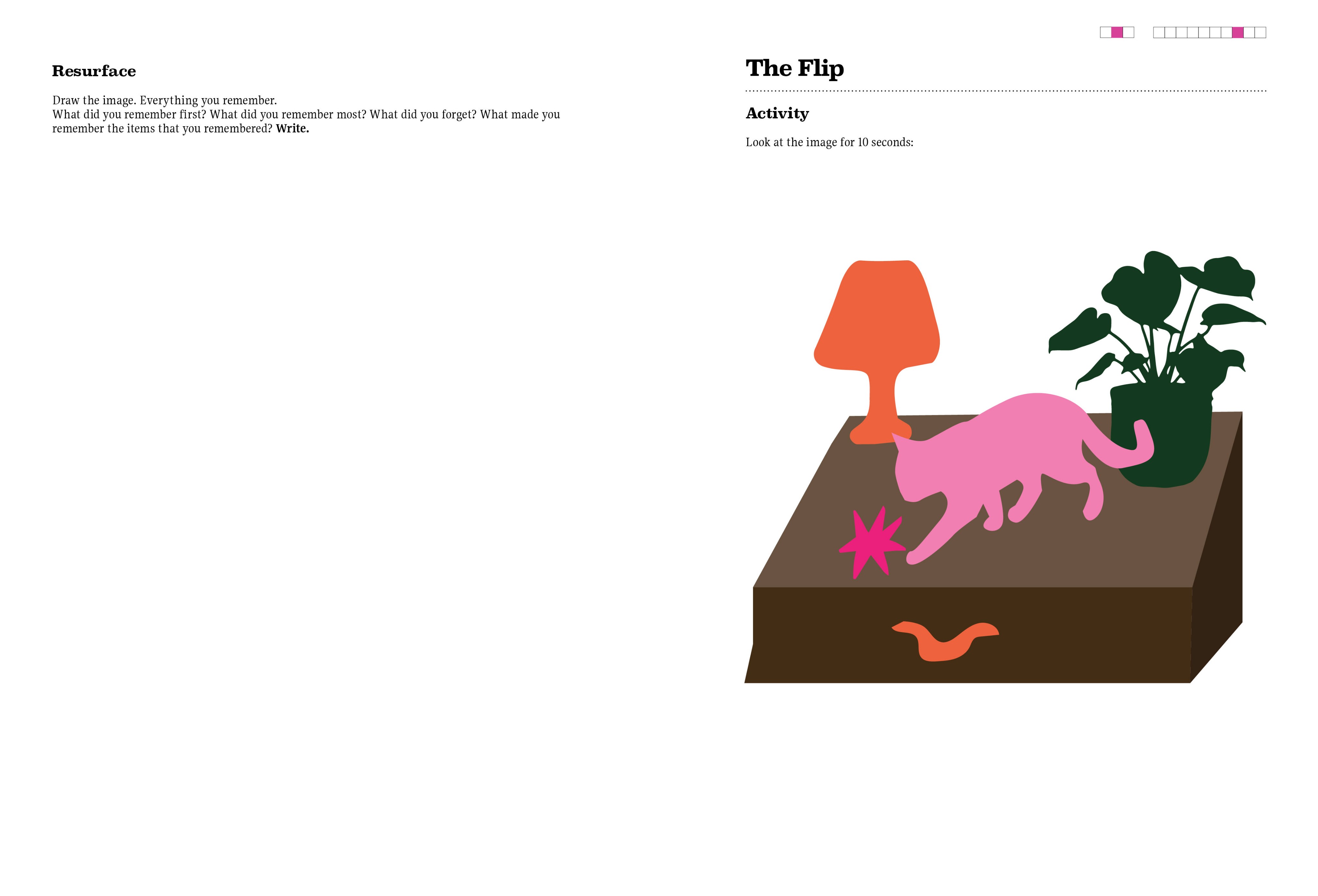


















RESURFACE
How would life in design be for learning systems if we took in consideration how we learned as children?
Thesis project: Concept
Throughout childhood, we understand the world through curiosity, play, intuition, and experimentation. As we grow, these instinctive ways of learning are gradually replaced by standardised systems that assume everyone processes information the same way. This project questions that assumption and explores how reconnecting with our earliest cognitive patterns can help us develop more personal and sustainable ways of learning.
Research
The research combines cognitive psychology, neuroscience, and design theory, drawing from Cognitive Load Theory, Gestalt principles, developmental psychology, and the concept of neuroplasticity. By studying how perception develops and how visual systems support intuitive understanding, using the Mexico City Metro wayfinding system as a case study, the project investigates how design can work with the mind instead of against it.
Product
These findings became Resurface, a modular editorial toolkit designed around playful exercises that encourage users to revisit their own cognitive structures. Through memory, analysis, mapping, and visual organisation, the binder allows each person to build a learning system based on their own intuition rather than predefined methods.
What for?
Rather than teaching what to learn, Resurface focuses on how we learn. It proposes that the answers to our most effective learning strategies may already exist within us, hidden beneath years of educational and social conditioning. By resurfacing these early patterns, the project encourages self-awareness, cognitive independence, and a more personal relationship with knowledge, proposing design methods that prioritise personal inherent cognitive ways of navigation rather than generic trends.
Guided by: Elio Salichs, Roc Herms, Mar Ferrer, Thinh Troung
1.
3.
2.
5.
9.
7.
11.
10.
4.
8.
1.
3.
2.
5.
9.
7.
11.
10.
4.
8.
Remember
1.
2.
3.
Explore
Practice


